
What is a Data Warehouse? The Foundation of Business Intelligence
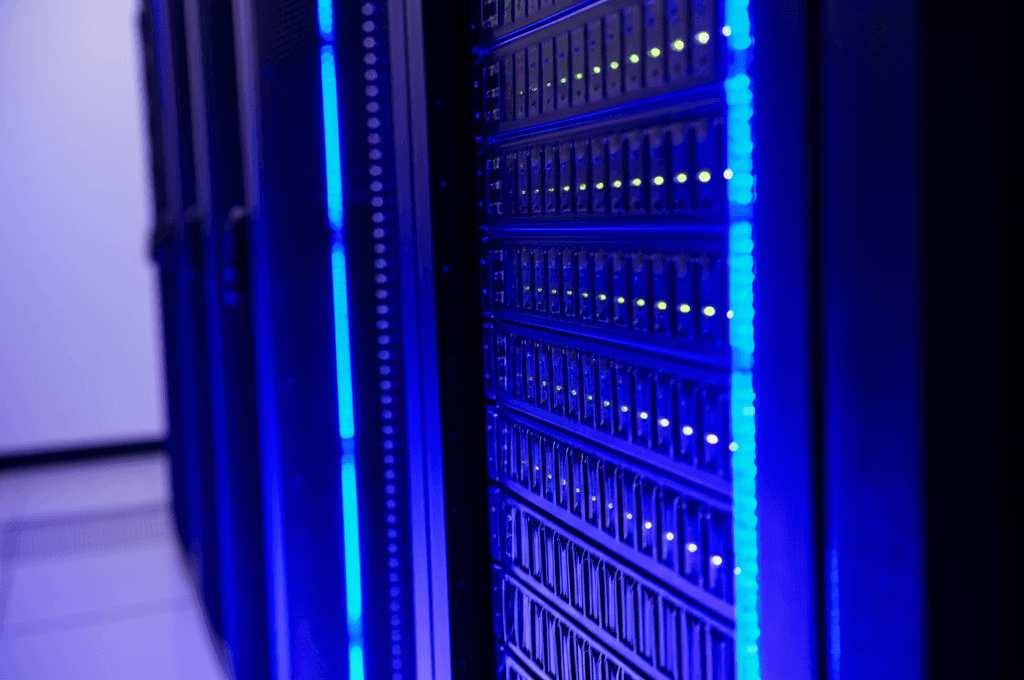
In the age of big data, businesses are drowning in information but starving for knowledge. A data warehouse serves as the single source of truth that turns this chaos into clarity, giving every team in your organization access to the same accurate, consistent, historical data for reporting and analysis.
What Is a Data Warehouse?
A data warehouse is a centralized repository that aggregates data from various operational systems within an organization. Unlike a standard database used for daily transactions (OLTP, Online Transaction Processing), a data warehouse is optimized for query and analysis (OLAP, Online Analytical Processing). It is the foundation upon which business intelligence is built.
Think of it as the brain of your organization, where memories (data) from dozens of operational systems are stored, organized, and made ready for recall (analysis). While your ERP is focused on processing today's orders correctly, your data warehouse is focused on answering questions like "how has order volume changed over the past three years?", a question that requires historical data and cross-system joins that operational databases are not designed to handle efficiently.
Key Components of a Data Warehouse
- Data Sources: The operational systems that generate data, ERPs, CRMs, financial software, marketing platforms, support ticketing systems, and any custom applications your business runs.
- Staging Area: A temporary holding zone where raw data is collected from source systems before being processed. Data in staging is not yet clean or organized, it is a raw copy of what was extracted.
- Integration Layer: Where data is cleaned, transformed, deduplicated, and standardized. This is where ETL or ELT processes run, mapping data from source system formats into the warehouse's unified schema.
- Presentation Layer: The organized, query-optimized tables and views that analysts and BI tools connect to for reporting. This is what users see when they open a dashboard or run a report.
- Metadata Repository: Documentation of what each table and field means, where it came from, how it was transformed, and when it was last updated. Without this, a warehouse becomes a mystery box over time.
Data Warehouse vs. Data Lake vs. Data Mart
These terms are often confused but serve distinct purposes. A data warehouse stores structured, processed data that is ready for business reporting. A data lake stores raw data in its native format, structured, semi-structured, and unstructured, at massive scale, with transformation happening later when specific use cases demand it. A data mart is a focused subset of a data warehouse that serves a specific business unit or function, such as a finance mart or a marketing mart.
Many organizations start with a data warehouse for reporting and add a data lake layer later for data science, machine learning, and exploratory analytics. The two architectures are complementary, not competing.
Why Your Business Needs One
Without a data warehouse, analysts have to manually pull data from system after system and reconcile it in spreadsheets. This not only wastes time but introduces errors, when two analysts pull the same report from different sources and get different numbers, trust in data collapses. A data warehouse automates the aggregation flow, ensuring that when you pull a report on Q1 revenue, everyone is looking at the same figure.
By decoupling analysis workloads from transactional workloads, a warehouse also ensures that running a heavy historical report does not slow down your live systems. Your website checkout and your year-over-year revenue analysis no longer compete for the same database resources.
Modern Cloud Data Warehouses
The traditional data warehouse, a large on-premises server running Oracle or SQL Server, has largely been replaced by cloud-native platforms that are faster to provision, easier to scale, and cheaper to operate. Snowflake separates storage and compute, allowing organizations to scale each independently. Google BigQuery uses a serverless model where you pay only for the queries you run. Amazon Redshift offers deep integration with the AWS ecosystem. Microsoft Fabric brings together data engineering, warehousing, and business intelligence in a unified platform.
For most small and mid-size businesses, a cloud data warehouse eliminates the infrastructure overhead of running a traditional data warehouse while providing capabilities that were previously only accessible to enterprise-scale organizations.
Common Data Warehouse Architectures
The Kimball methodology organizes data into dimensional models, fact tables containing measurable events (like sales transactions) and dimension tables containing descriptive context (like customer, product, and date). This approach is intuitive for business users and performs well for most reporting use cases. The Inmon methodology builds a normalized enterprise-wide model first, then creates data marts for specific functions. The Data Vault approach focuses on auditability and scalability, making it popular in regulated industries. Most modern implementations draw from multiple methodologies based on specific requirements.
How to Plan Your First Data Warehouse
Start with a clear business question that is impossible to answer reliably today. "What is our customer acquisition cost by channel over the past 24 months?" is a better starting point than "let's build a data warehouse." The business question defines the data sources you need, the granularity of data required, and the reports you need to produce, which in turn defines the schema, transformation rules, and infrastructure requirements.
Prioritize quick wins. A minimal viable data warehouse that answers two or three high-value questions delivers immediate ROI and builds organizational trust in the platform. From that foundation, scope can expand incrementally.
Ready to build a data foundation for your business?
Hawkeye Core helps Houston businesses design, build, and maintain data warehouses that consolidate information from all your systems into a single, reliable source of truth.
Talk to an expert